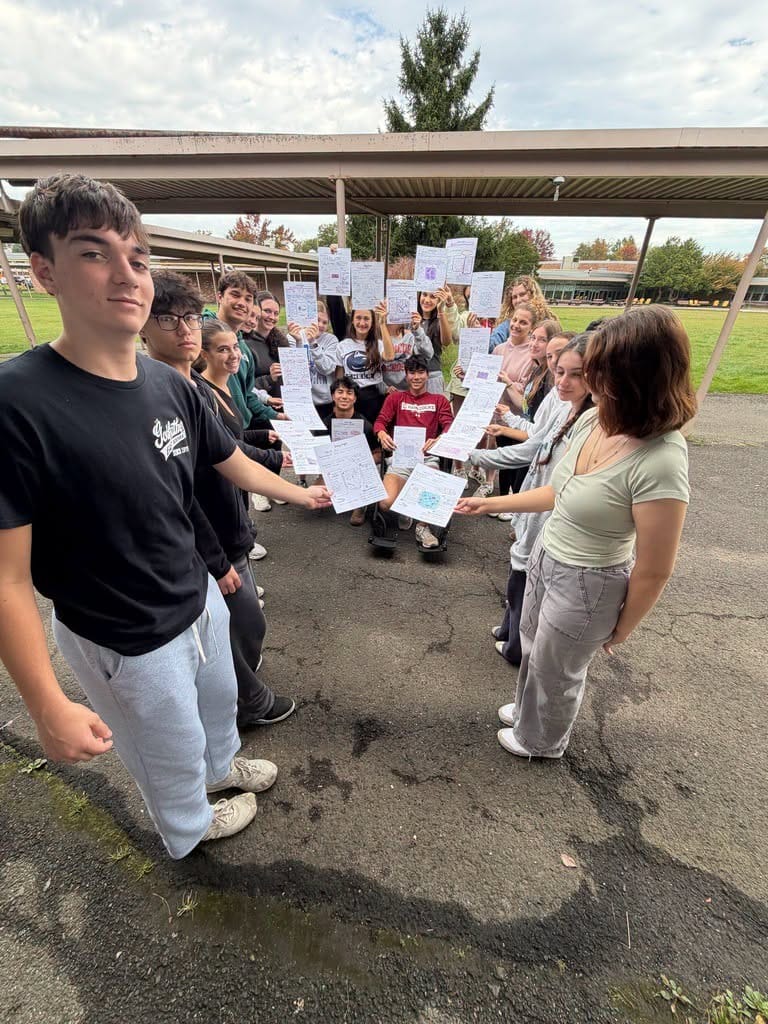
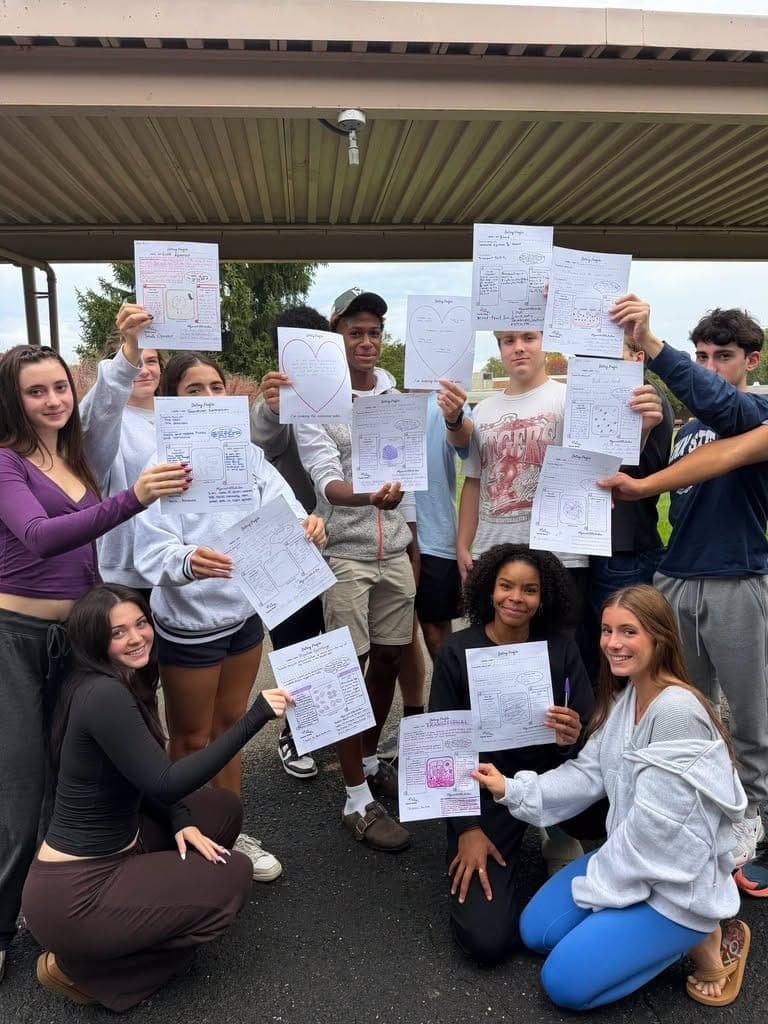
Hanover Park science students recently brought a playful twist to test preparation by creating “Histology Dating Profiles” for tissues found throughout the human body. Students developed profiles for their assigned tissues, then interacted with classmates while reviewing tissue structures, functions and distinguishing characteristics.
Behind the lighthearted format was a serious scientific subject. Histology is the study of tissues at the microscopic level. The human body has four main tissue categories: epithelial, connective, muscle and nervous. Their different structures help explain the jobs they perform.
Epithelial tissue covers surfaces, lines internal spaces and forms glands. Connective tissue supports and binds structures; its diverse forms include bone, cartilage, fat and blood. Muscle tissue contracts to produce movement, while nervous tissue supports communication through electrical and chemical signals.
Those differences offer plenty of material for an imaginary profile. Muscle tissue could describe itself as “always ready to make a move,” while epithelial tissue might emphasize its talent for maintaining boundaries. These playful examples reflect the relationship between a tissue’s structure and its function.
For the Hanover Park students, the assignment turned that relationship into a social review activity. Instead of studying each tissue in isolation, classmates shared their work and used the profiles to revisit the features that make tissues recognizable.
The activity combined creativity with scientific vocabulary, giving students another way to organize information before their upcoming test. Describing a tissue’s defining qualities required attention to what it looks like, what it does and how it differs from other tissues.
The result was a memorable classroom connection: a little matchmaking, a lot of biology and a fresh way to get acquainted with the human body.