The project brings together creativity, research and practical problem solving. Students began by investigating local wildlife, then sketched ideas, revised their designs and built their final creations. Their work connects artistic expression with the needs of living things beyond the classroom.
Three-dimensional art has height, width and depth. A drawing can suggest the appearance of space on a flat surface, while a sculpture physically occupies space and can be viewed from different angles. Artists consider how shapes, textures, openings and surrounding space work together.
For Hanover Park’s students, that means thinking about both appearance and function. A habitat sculpture presents a design challenge: how can an object be visually interesting while also offering space for a small animal?
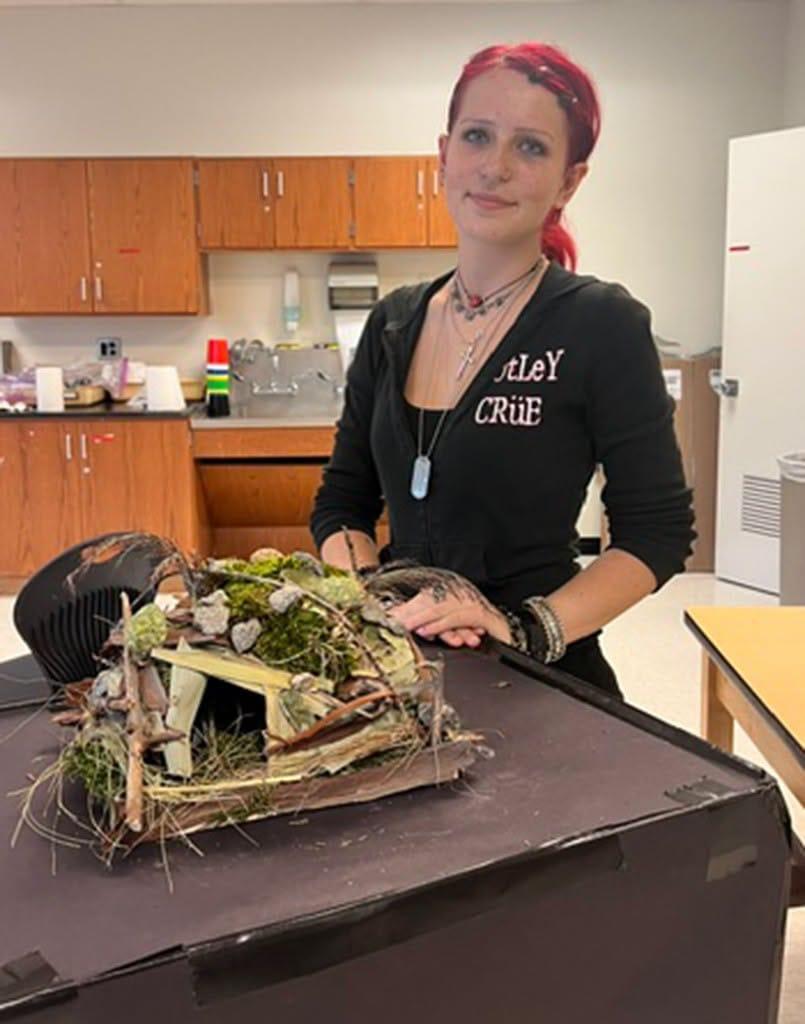
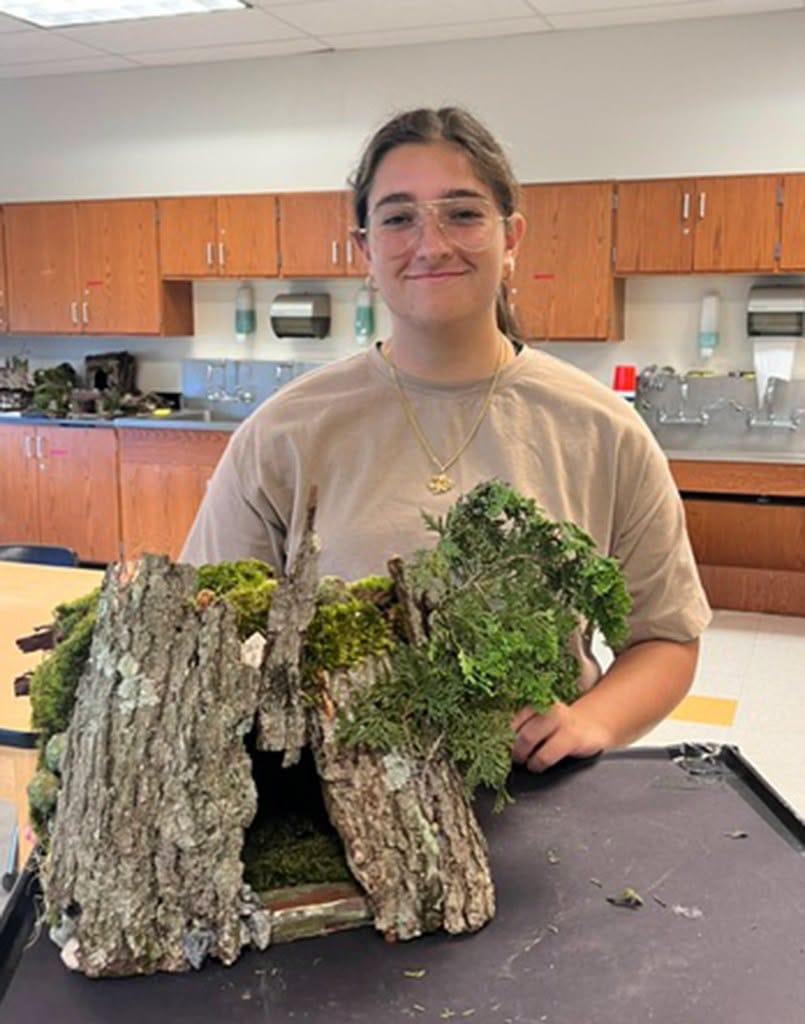
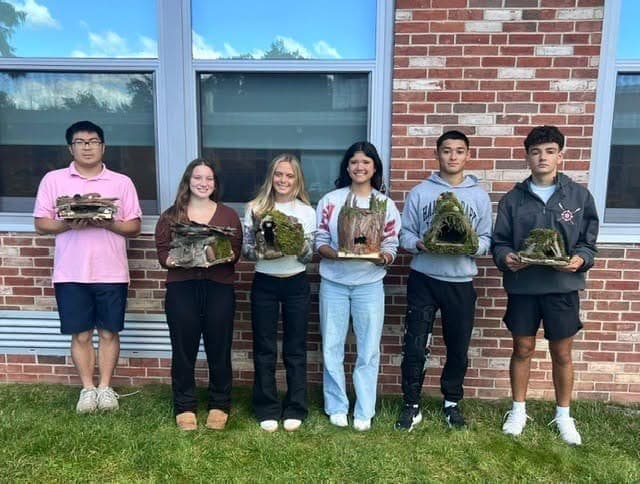
Photographs of the projects show structures incorporating bark, twigs, moss and other natural textures. Openings and sheltered spaces become part of the artwork, giving each piece its own character.
The process also highlights an important part of making art: revision. Moving from an initial sketch to a finished structure requires students to reconsider ideas, solve construction problems and make decisions as their work develops.
The school has encouraged the campus community to watch for the sculptures and the small creatures that may use them. These creations offer a fresh way to notice the connections between art, wildlife and everyday surroundings.