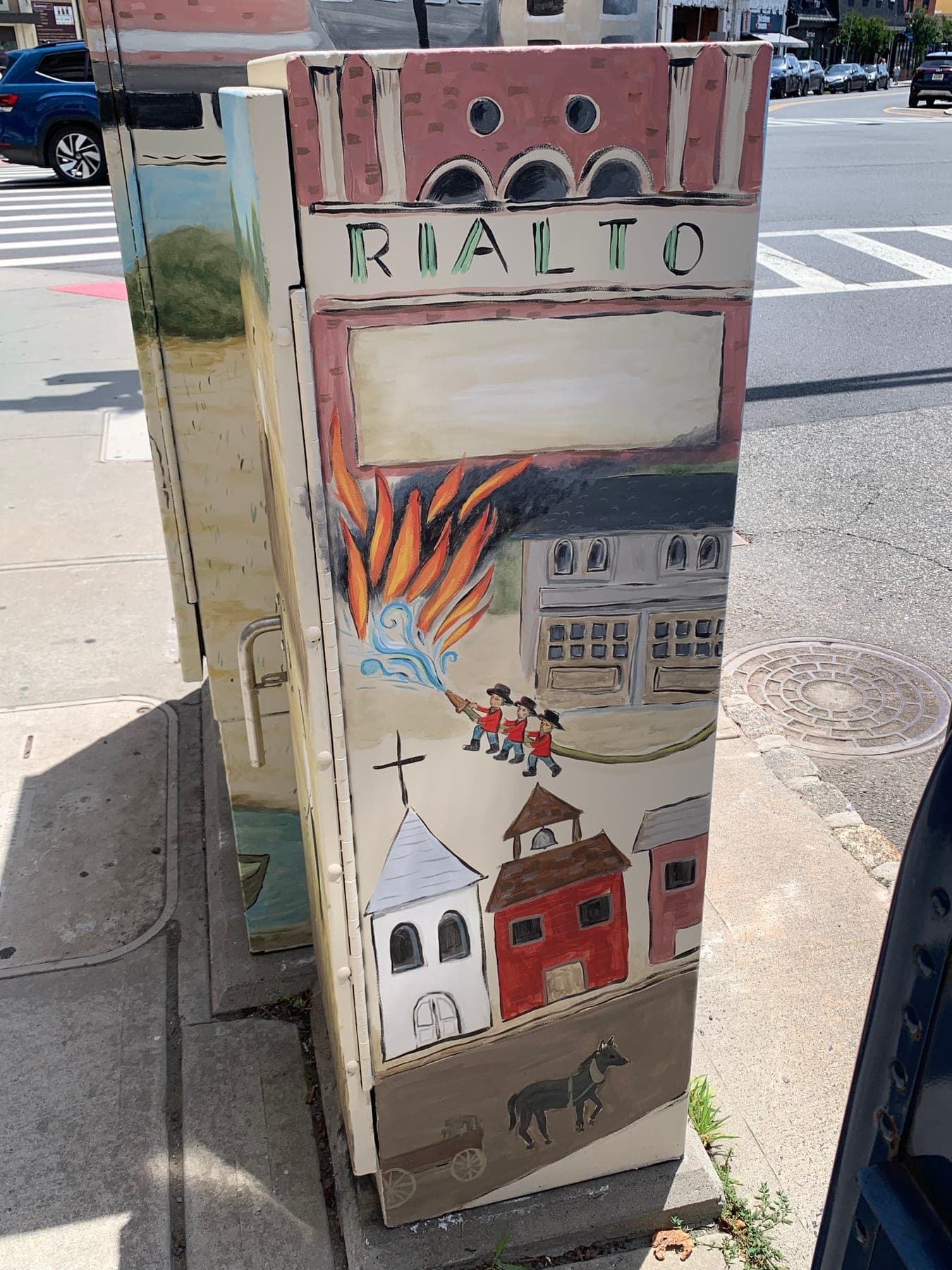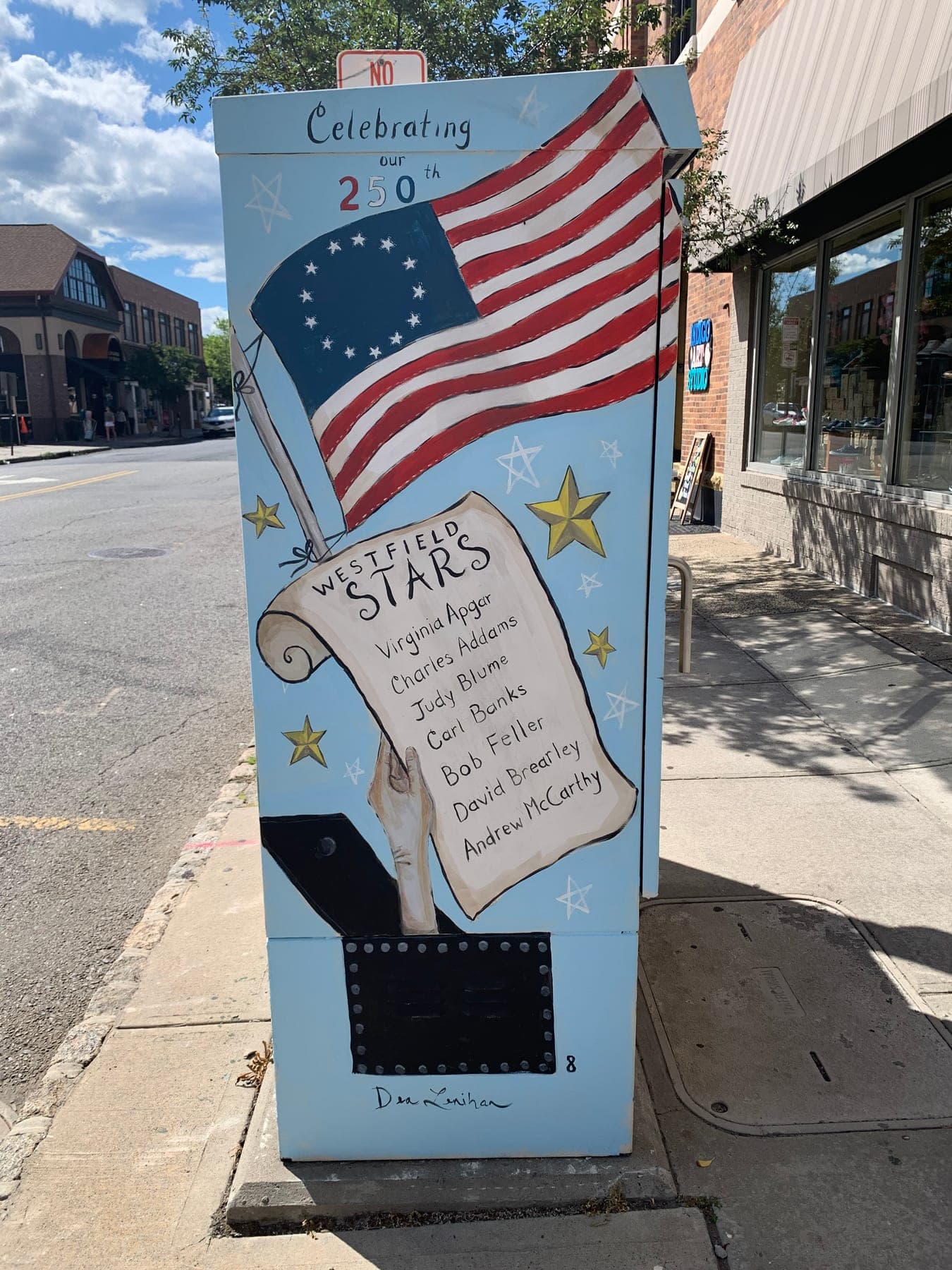
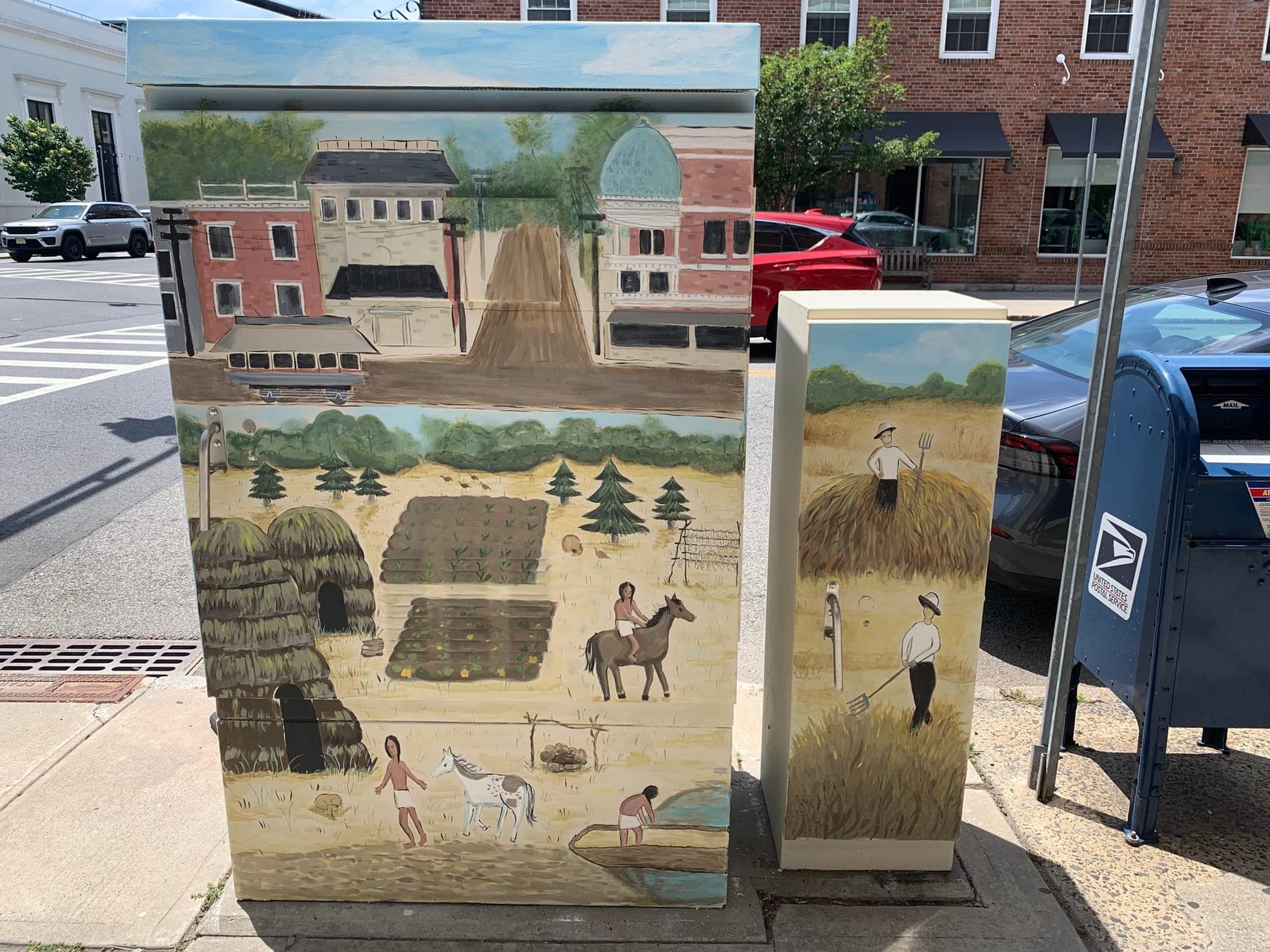
The mural, created by artist Dea Lenihan, traces Westfield's story from its Colonial and Revolutionary roots through the present day, now on display for anyone passing through downtown.
Painted across a pair of utility boxes at the corner of East Broad and Elm Streets, the artwork was unveiled by the Westfield Public Arts Commission as part of the town's America250 celebration. According to the town, Lenihan is a Westfield resident and children's book illustrator, and the scenes combine the landmarks and legends that make Westfield's history unique.
Early scenes show farm fields and thatched dwellings beside a canoe, and farmers working a haystack. Others show a trolley rolling down a downtown street, a Rialto sign, firefighters hauling a hose toward a blaze, a church and a horse-drawn wagon.
Westfield's roots run deep. The town began as the "West Fields" of Elizabethtown, and nine of its original 18th-century houses still stand, according to the Westfield Historic Preservation Commission. They include the Miller-Cory House, dated to about 1740 and described as the town's oldest and best-preserved home from that period.
The Revolutionary War also touched the community. According to the Westfield chapter of the Daughters of the American Revolution, British forces occupied Westfield overnight after the Battle of the Short Hills on June 26, 1777. More than 70 Revolutionary War veterans are buried in the Presbyterian Church cemetery on Mountain Avenue.